
The velocity of technological change has reached a point where “the future” is no longer a distant concept but a rolling wave that reshapes our lives every few months. As we stand in 2026, looking toward the end of the decade, we are moving past the era of digital experimentation into a period of physical and structural execution. The next five years will not just be about better apps or faster internet; they will be defined by the integration of intelligence into the physical world. And the radical decentralization of how we live and work.
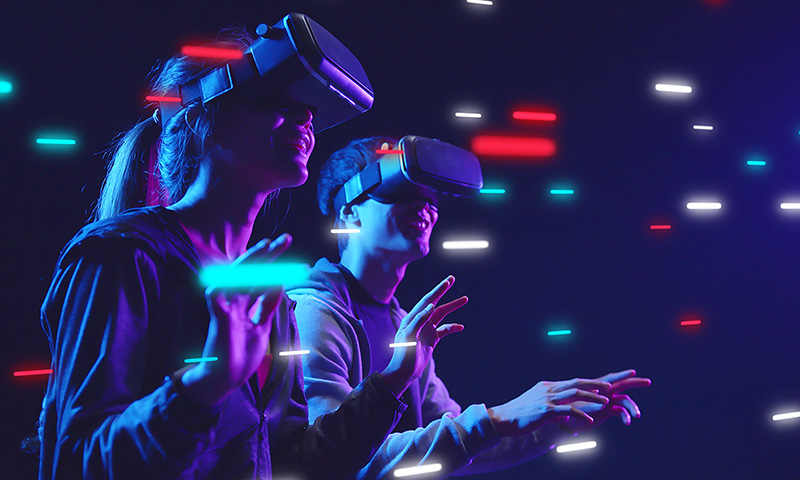
Here is an in-depth look at the pillars that will define the next five years in technology.
The Evolution of Intelligence: From Chatbots to Agentic AI
For the past few years, Artificial Intelligence has largely been a conversational novelty or a productivity assistant. However, between now and 2030, we will witness the rise of Agentic AI. Unlike current models that require constant prompting, agentic systems are designed to operate with intent.
By 2028, AI “agents” will likely manage complex, multi-step workflows without human intervention. Imagine a system that doesn’t just draft an email but manages your entire supply chain. Negotiates with vendors based on real-time market fluctuations, and re-routes logistics during a storm—all while you sleep. We are moving from “AI as a tool” to “AI as a teammate.”
The Physical Manifestation: Robotics and Humanoids
One of the most visible shifts in the next five years will be the “embodiment” of AI. We have mastered the digital brain; now, the focus is on the physical body.
- Humanoid Workers: Companies like Tesla, Figure, and Boston Dynamics are rapidly iterating on humanoid robots. By 2029, these machines will likely transition from pilot programs in controlled warehouses to general-purpose labor in manufacturing and perhaps even retail.
- Collaborative Robots (Cobots): In smaller businesses, cobots will become as common as printers. These robots are designed to work safely alongside humans. Handling repetitive physical tasks while humans focus on the creative and oversight elements of the job.
- Autonomous Mobility: The next five years will see the “Robotaxi” move from a Silicon Valley experiment to a standard urban utility. As 5G matures and 6G development begins, the infrastructure for fully autonomous cities will start to solidify.
Biotechnology and the Era of Precision Medicine
The intersection of AI and biology is perhaps the most consequential trend for human longevity. We are entering the age of Generative Biology.
Traditionally, drug discovery took a decade and billions of dollars. With AI-driven simulations, researchers are now identifying viable drug candidates in weeks. By 2030, we can expect “niche” medicines tailored to an individual’s specific genetic makeup to become a standard part of healthcare. Furthermore, gene-editing technologies like CRISPR are moving toward more mainstream clinical applications. Potentially offering permanent cures for hereditary diseases that were previously considered “manageable” but incurable.
The Quantum Leap: Solving the Unsolvable
Quantum computing is currently in its “vacuum tube” era—bulky, sensitive, and experimental. However, the roadmap for the next five years suggests we are approaching Quantum Utility.
While we might not have quantum laptops by 2030, cloud-based quantum processing will become a vital resource for materials science and cryptography. We will see the development of new materials—super-efficient batteries. Carbon-capture membranes, and room-temperature superconductors—that were simply impossible to simulate on classical computers. This “computational superpower” will be the silent engine behind the next green revolution.
Energy and Sustainability: The Green Tech Imperative
Technology and ecology are no longer at odds; they are becoming one and the same. The next five years will be dominated by Circular Tech.
As global regulations on carbon footprints tighten, “Green Technology” will shift from a corporate social responsibility (CSR) goal to a core business requirement. We will see the mass adoption of:
- Next-Gen Energy Storage: Moving beyond lithium-ion to solid-state batteries and long-duration energy storage.
- Digital Twins for the Planet: Using massive sensor networks and IoT to create digital replicas of entire ecosystems, allowing cities to manage energy and water with 99% efficiency.
Conclusion: A World Re-Centered on Human Intent
The next five years in tech will be characterized by a shift from “virtual” to “vital.” We are moving away from the screen-centric world of the 2010s and toward an era where technology is embedded in our walls, our clothes, and even our biology.
The challenge of the next half-decade will not be the lack of capability, but the necessity of governance. As AI agents gain autonomy and biotechnology gains the power to edit life, the most important “tech” we develop will be the ethical frameworks and safety protocols that ensure these innovations serve humanity rather than displace it.
The year 2030 will look back at 2026 as a turning point—the moment when we stopped wondering what technology could do and started deciding what we wanted it to do.
Would you like me to create a complementary social media post to help promote this article?